Yes, and then they start complaining that the shared domain objects are not kept up to date by team $notMine, and so they inevitably go to a shared library where they fall back into the same issues.
Is that a result of poor DDD, not modelling more appropriate objects? Eg a Customer Address, Delivery Address, Invoice Address Vs just a single shared Address
Or is there still too much conflict for the truly shareable objects?
I used to use infinity for reddit, after the api saga, I was able to patch it with my own api key since personal ones were still free. I lost the key since, and had to re-install Infinity, so when I go to the reddit api page, turns out they don't give you keys any more, and instead you need to sign up to their developer platform, which I requires a lot of hoops to get a key for free, and from what I understand, that's a big if.
Anyway, needless to say I've stopped using it for the past 3 months or so. I still open old.reddit on my computer every now and then, but I use reddit so much less because of this.
The reason I use plan then implement is because I can adjust the plan, whereas if I get it to implement straight away, it might (and often does) make the wrong decisions that will be harder to adjust, or I'd have to adjust it after the fact.
One big pain point is not seeing the thinking trace. I noticed using pi with a self hosted model that I could spot, stop and correct my prompt much faster. With claude etc I have to first wait for it to think 3 minutes and then notice it got completely off the path I wanted.
I still use a plan, because my local model is not as smart as opus, but I can iterate much faster.
I’ve seen people have success figuring out model reasoning by adding a required `reasoning` parameter to tool calls. Might be worth experimenting with this for the `write` tool call in a coding agent harness.
Also "divide and conquer" is still applicable. Tired of waiting 10 minutes for the model to come up with a plan that ends up being wrong? Divide the problem into pieces and attack the pieces individually, worst case scenario the model spends 2 minutes and got some detail wrong, but way easier to correct the tiny stuff.
Once you've done with the pieces, do one "integrate them together" part, then you have a fully formed plan with less chance of wrong stuff in it. Yes, this requires a bit more interactivity than "prompt model then come back after making and drinking a coffee", but personally I prefer that.
this so true. its really hard to make sure a model isnt going off the rails if i dont see full cot. the fact that oai and anthropic models hide it now has made them less reliable. which is a shame
5.6 sol is pretty good, its definitely very very well tuned, i'm not quite sure which of the others i should use near term, but theyre doing great work
Please don't do this. The station is very busy and the commuters do not have time to navigate around people focused on their smartphones.
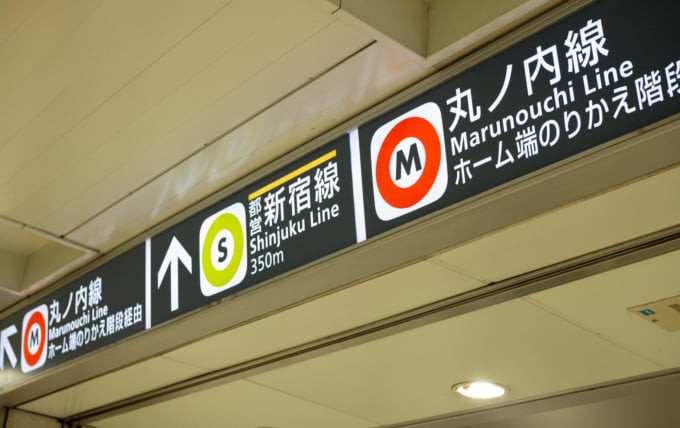
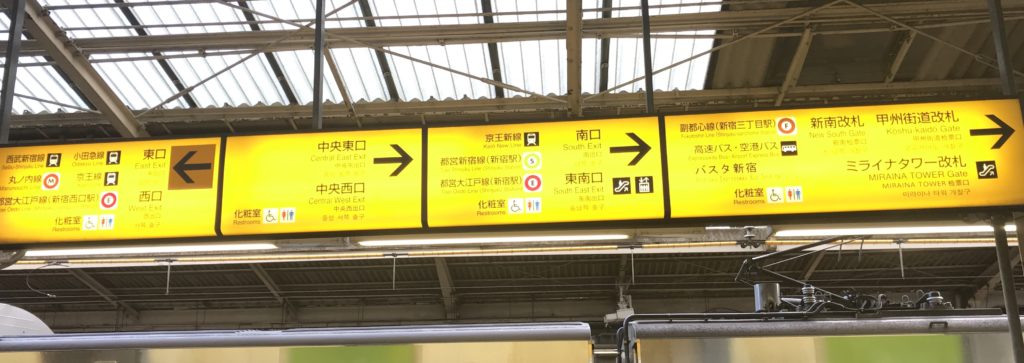
Instead, familiarize yourself with the general layout. There's no need to memorize the entire map, only the portion you will be using. Inside the station there are plenty of signs overhead and even on the floor to help navigate.
I always tell friends to just go to any east exit and make their way outside. That's most likely where they're headed and it's easier to navigate outside the station than inside.
Do you have an example? Your comment seems like an exaggeration, I have never seen any signs pointing to each other from every direction.
Also, I am curious of the justification. Why would anyone place signs that "... are incredibly confusing and often will all point to each other from every direction."
The problem I would typically have (not just in Shinjuku) was with directions that did not repeat/update as you continued on through junction points. It made navigation more stressful.
No, it's incorrect that signs "point to each other."
There are multiple ways to get to various lines' platforms. This is not signs pointing to each other, this is signs in different places pointing to the same destination.
I live in Tokyo and while I do not go through Shinjuku often as I mostly live and work on the east side, I have no issue using the signs to find the platforms and exits I am looking for.
If you pay attention to what the signs have written on them, they will take you where you are trying to go.
For what it's worth I was joking. I've only been Shinjuku as a tourist, so I unfortunately won't be able to familiarise myself with the layout, but I do feel your pain. I've seen the same thing in smaller stations in the London and absolutely hate it.
Heavy disagree. I can't be sure about other AI coding agents as I haven't used others enough, but especially the items around prompt cache misses and compaction have hit me personally.
This article (combined with another article previously comparing CC and OC's system prompt, to which someone replied pi.dev sends even less) has made me want to switch agents, so I'm likely going to try out pi.dev and aim to migrate.




reply